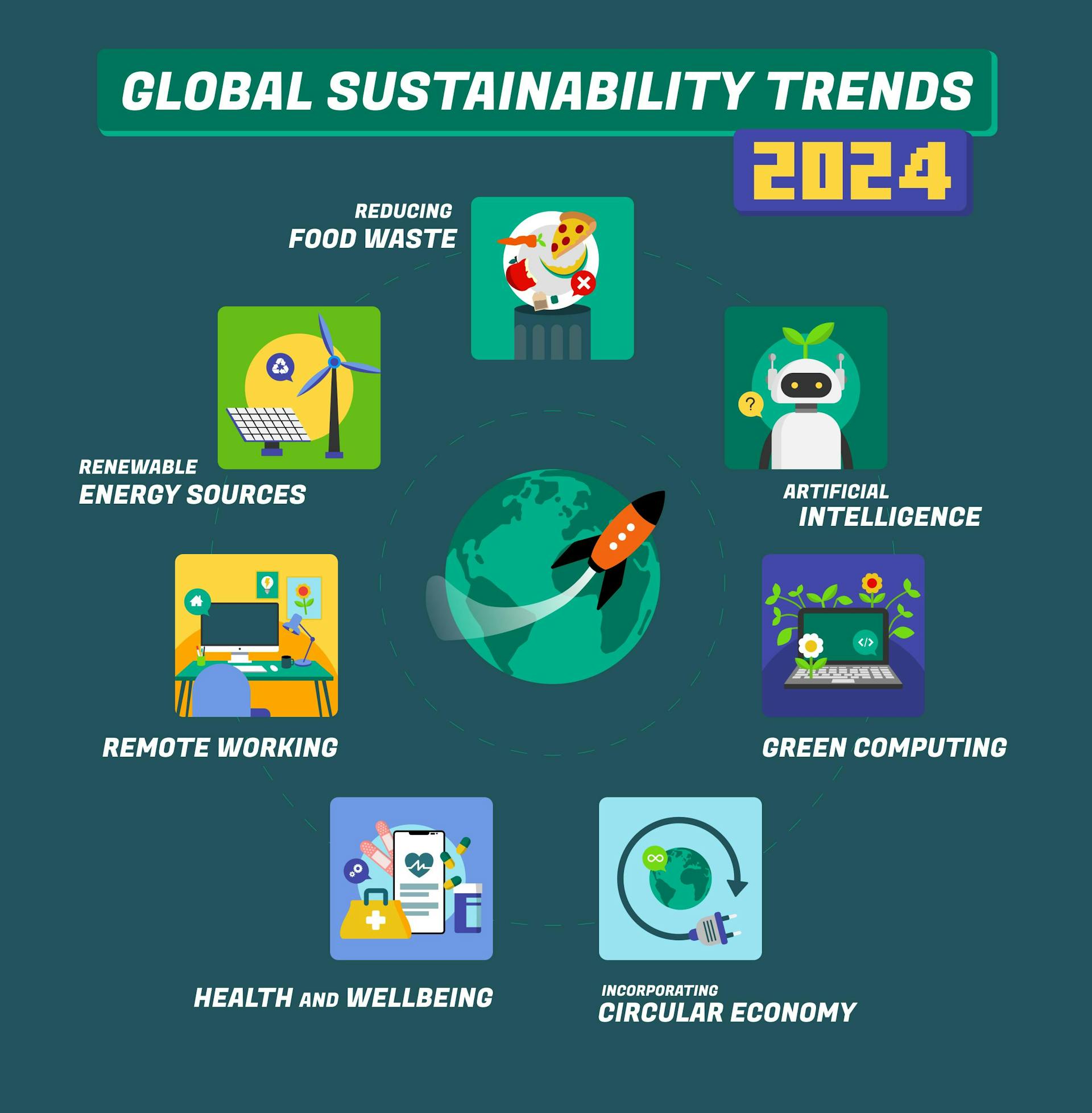
Climate and sustainability are moving from the margins of public debate and are now at the heart of economic planning, corporate strategy, and everyday decision-making. Scientific research has been evident for decades, but the application of that science into policy, investment, and change in behaviour is happening at a pace and scale that seemed unattainable just some years ago. Progress is uneven, contested within certain quarters and not nearly fast enough for the majority of experts. However, the direction of travel is shifting in ways that are increasingly complex to comprehend. Here are ten of the trending topics related to sustainability and the climate that will be making headlines in 2026/27.
1. It is the Energy Transition Accelerates Beyond ExpectationsRenewable energy development continues to surpass even optimistic projections. Additions of capacity to wind and solar have surpassed records every year. costs have dropped to levels that make renewable energy the cheapest option for most markets without subsidy, and the investment in grid infrastructure and storage is scaling up to meet. The transition to renewable energy is not without complexity. Fossil fuel dependency remains deeply involved in a variety of economies, and the pace of change drastically varies between regions. However, the logic of economics behind green energy has become so compelling that momentum is now substantial enough to sustain the economies which are leading the transition.
2. Carbon Markets Have Grown and Are Experiencing greater scrutinyVoluntary carbon markets go traversing a turbulent period which has led to a number of investigations that have revealed lots of widely traded carbon credit produced less carbon-related benefits than what was claimed. In response, there has been a campaign for a higher standard with greater transparency and more thorough verification. The compliance carbon markets linked to regulatory frameworks are growing in both size and reach as well as the pressure for voluntary markets for genuine additionality and permanence is reshaping what an authentic carbon offset appears like. The underlying notion is important but the criteria required for participation are growing.
3. Climate Adaptation Receives Long-Overdue InvestmentFor many years, the climate agenda was mostly focused on mitigation, reducing emissions to reduce the risk of future warming. The reality that substantial warming is already occurring has driven the need for adaptation, ensuring resilience to the consequences that are inevitable, to the forefront of. In addition, heat-resilient urban design, drought-resistant agriculture, or early warning system for extreme storms are all getting investments at a rate that shows a more accurate evaluation of the challenges that the coming decades will bring. Adaptation is no longer thought of as abandoning mitigation, but rather as an important alternative to mitigation.
4. Corporate Sustainability Reporting is now a requirementThe time of voluntary, self-reported, but largely unsubstantiated sustainable business practices is coming towards a conclusion in many areas. Sustainability disclosure obligations that are mandatory that address climate risk exposure, as well as impacts of supply chains are being rolled out across major economies. This is forcing organisations to switch from aspirational zero-carbon pledges to auditable and documented programs with precise interim goals. This transition is challenging for many businesses, however the move to standardised, comparable sustainability data is accepted as a vital step in ensuring that corporate environmental commitments accountable.
5. The Food System Comes Under Greater Pressure to ChangeAgriculture and land use are responsible for a significant proportion of the greenhouse gas emissions that are generated worldwide, and the food system in general, which includes processing, manufacturing, packaging and disposal, has an impact on climate that is ever more difficult to see. Consumer behavior is changing gradually to plant-based food options, as they become popular and the reduction of food waste getting more traction at both the household and commercial levels. A lot more importantly, pressure on policies on the emission of agricultural gases and deforestation in relation to production of food and use of the land to sequester carbon is building to change the nature of food production, including how it is produced, and how.
6. Biodiversity Loss Gains Traction Alongside ClimateFor the majority of the past decade, the loss of biodiversity has been overlooked in the light of climate change in both public and policy discussions despite being an equally significant global problem. That is changing. The international frameworks that govern corporate reports, obligations and an increasing amount of scientific knowledge about the links between ecosystem collapse and human welfare have raised the profile of biodiversity considerably. The concept of nature-positive business working in ways that can restore rather than destroy natural systems, is advancing from niche to a growing standard in the same way net zero was just a few years ago.
7. Green Hydrogen Moves From Promise to PilotGreen hydrogen, a form of energy that is generated by renewable electricity to split water, has been mentioned as a necessary method of decarbonising certain sectors where direct electrification is not feasible, which includes shipping, heavy industries and long-haul aviation. The problem has always been cost and size. In 2026/27, a rising the number of massive green hydrogen developments are moving from feasibility studies into production. Costs are dropping as electrolyser technology becomes more advanced, and governments are backing the industry with significant investment. Green hydrogen's ability to scale at a sufficient rate to meet demands placed on it is an open question, but the pace of progress is increasing.
8. Climate Litigation Intensifies As A Tool to Ensure AccountabilityLegal enforcement has emerged as one of the more potent mechanisms for holding governments and corporations to their climate pledges. Legal cases brought by citizens cities, as well as environmental groups have resulted in landmark rulings in many countries, with judges more willing to decide that the major emitters as well as governments must comply with legal requirements related to protecting the climate. The instances of legal cases that deal with climate issues is growing rapidly over the past five years, and is continuing to grow. For corporate boards and government ministers, the risk to their legal rights related to inadequate climate action is now a major concern rather than a hypothetical one.
9. The Circular Economy Moves Into The MainstreamIn the model that is linear, take making, putting away, and disposing is continually under pressure from regulators, consumer expectations as well as the economic incentive of allowing products to remain in use for longer. Extended producer responsibility laws are expanding, which makes manufacturers accountable for the impacts of their end-of-life use on their products. Repair reuse, resale, and repair markets are expanding across different categories from electronics to clothing to furniture. A majority of companies are investing heavily in the creation of solutions and supply chains based around circularity rather than treating circularity as a secondary issue. The circular economy is no longer a niche idea, but a more prominent part of how sustainable and sustainable business is defined.
10. Public Attitudes Shaped by Climate Fear and BehaviourThe psychological component of the problem of climate change is gaining significant focus. A constant anxiety about environmental breakdown, is particularly widespread among young people who have been raised having the climate crisis as a characteristic of their lives. This is influencing the way consumers behave in career decisions, wellbeing, and even the way we engage in politics in the ways that are revealing in large numbers. How we assist people managing climate anxiety, while directing the anxiety into constructive action instead of apathy or despair is emerging as an issue for public health along with education and those in leadership positions.
The magnitude of the issue to be faced by climate change, as well as ecological decline is massive, and there's an abundance of reasons for reservations about whether the current efforts can be considered sufficient. What these trends suggest the reality of a world that is coping with the issue more deeply with greater rigor, in more concrete terms, and quicker than ever before at any previously. The gap between what's going on and what's needed remains large, however it is increasing in number different areas, starting to diminish. To find additional information, check out a few of these reliable newsbritsss.uk/ and find trusted reporting.
 The Top 10 Fitness And Sports Trends Gaining Ground In 2026
The manner in which people approach sport fitness, exercise, and physical performance is changing faster than at any other moment. Technology is revolutionizing both how the elite athletes train, compete, as well as the way ordinary people think about and manage their fitness. A culture's views on physical activity change in ways that are broadening participation, breaking down conventional barriers, and producing new forms of exercise and exercise that weren't there only a few decades ago. No matter if you're a professional athlete, a casual gym-goer or someone just beginning to consider physical health, the landscape looks meaningfully and different going into 2026/27. These are the top ten sports and fitness trends taking over.
1. Wearable Technology Delivers Increasingly Sophisticated InformationThe new generation of wearable fitness technology that will be available in 2026/27 has gone far beyond counting steps and monitoring heart rate. Continuous glucose monitoring blood oxygen saturation heart rate variation, skin temperature, condition of hydration, sleep structures are being tracked by devices for consumers with a level of accuracy that was previously only available in elite or clinical settings. The focus has changed from the collection of data to its interpretation effectively, and the platforms built around wearables will invest a significant amount in AI-driven analysis that transforms physical data into useful guidance for ordinary users instead of just numbers that require an expert's interpretation.
2. Recovery is as important as TrainingThe realization that adapting to training is a process that occurs during recovery rather than during training itself has elevated recovery from being a sideline to an integral component of the fitness culture. Sleep optimisation, active recovery methods, cold water therapy and saunas that expose you to heat as well as compression technology, massage guns, and nutrition strategies that aid in recovery are all considered to be mainstream rather than niche interests. Elite sports have long known this, however the tools know-how, the information, and the cultural consent to prioritize recovery have now reached recreational athletes and general fitness enthusiasts. This shift is a reflection of a larger movement away from the "more is more" approach to training. It is more accurate calibration of stress and recovery.
3. Functional Fitness is a different concept from pure aesthetic ObjectivesThe primary motivator for the gym has always been appearance, constructing a physique that appears a certain way. An important shift in the way we think about fitness is being made towards functional fitness exercising that focuses on what your body is able to do instead of how it appears. Physical strength for everyday use, mobility to balance, cardioresilience, and the ability to stay physically fit beyond old age are becoming more prominent as fitness-related goals. It is due to a aging populace that is thinking more deeply about longevity and longevity, and also a understanding of what fitness is actually about. The training methods based around exercise quality, strength and endurance, and metabolic conditioning are the principal users.
4. Physical and mental health are Increasingly LinkedThe evidence-based connection between regular physical activity to improved wellbeing has become sufficiently robust that exercise is becoming discussed in clinical contexts as an effective treatment for depression, stress and anxiety rather that merely a simple lifestyle recommendation. This is influencing both how fitness is promoted and also what people's attitudes are towards their own fitness habits. The idea of moving as an exercise for mental health as well as physical health maintenance is reaching mainstream audiences and changing the relationships people have with exercise from an obligation linked to appearance, to a lifestyle that is tied to overall well-being. Exercise prescription by healthcare providers has been becoming more common as a result.
5. Combat Sports Reach New Mainstream AudiencesMixed martial arts, boxing or kickboxing, as well, and more recent forms like bare-knuckle combat have seen massive growth in their audience thanks to social media, streaming platforms and the rising popularity of cross-over events that draw popular attention to combat sports. Beyond spectatorship, combat sport are growing rapidly, with boxing fitness, Brazilian jiu-jitsu, Muay Thai and MMA training drawing large numbers of people with no desire to compete but find that the combination of skill development training, physical fitness, and psychological challenges appealing with benefits that traditional gym training is not able to provide. The culture and community of fight sports gyms is providing to be an effective retention method in a fitness industry that has a problem with dropout.
6. Individualised Nutrition and Supplementation goes MainstreamThe application of personalised approaches to sports nutrition designed to meet the needs of each individual's physiology fitness demands, recovery requirements and health goals more than a general set of guidelines for population health, has been able to transition from a sport of elite athletes into the mainstream fitness culture. Dietary recommendations based on DNA, gut microbiome analysis, continuous glucose monitoring in order to better understand the individual's metabolic responses to food and AI-driven dietary management tools can now be found by amateur athletes and fitness enthusiasts. The supplement market is changing alongside this, with more sophisticated and evidence-based products replacing the more speculative section that was previously prone to overclaiming.
7. Outdoor And Adventure Fitness Experiences SurgeFitness centers are facing increased competition from adventure and outdoor fitness experiences that provide physical challenge, as well as environmental exposure, novelty, and connections to others in ways that indoor exercise is difficult to replicate. Trail running, open water swim, outdoor climb, gravel cycling, and organised adventure races are all increasing significantly. The attraction extends beyond the diversity. The study the advantage of the particular psychological and physiological advantages of exercising in nature is forming an argument for the fact that physical activity outdoors can lead to wellbeing outcomes that indoor counterparts do not totally measure up to. The urban population with limited access to nature is driving demand for structured experiences that bring outdoor adventure within reach.
8. Esports and physical Gaming Invert Traditional BoundariesThe relationship between digital gaming as well as physical exercise is more complicated than the conventional notion of asedentary lifestyle suggests. Esports athletes train with organized physical conditioning programs created to help them achieve the speed of reaction, focus and management of stress that their competition demands, and the fitness required for high-level games is being considered increasingly seriously. In parallel, physically active gaming styles, mixed reality fitness experiences, and gamified fitness platforms are attracting the public to movement who have not previously exercised in a traditional way. The distinctions between physical sport and mental sport as well as online entertainment are becoming blurred and are increasing the overall number of people engaging in structured workouts and cognitive training.
9. Women's Sports Continues To Take Off in Rapid AscentWomen's sport is experiencing a sustained period of growing attendance, broadcast audiences, sponsorship, as well as culture that marks a real structural shift, and not just a temporary surge. Cricket, football, rugby basketball, athletics, and football are all seeing female-dominated competitions attracted by the kind of commercial commitment and mainstream interest that was previously concentrated almost exclusively on male athletes. The pipeline of young girls involved in organized sports is stronger than at any time in any of the developed markets, which could have implications for the talent pool participants, participation rates, aswell as social acceptance of women as serious athletes. The direction is positive even as huge gaps in funding, media coverage, and wages relative to equivalent men's competitions persist.
10. Longevity and Healthspan Drive New Fitness PhilosophyOne of the most significant changes within the fitness industry heading into 2026/27 is the reframing of training for longevity and healthspan, as opposed to short-term performance or aesthetic objectives. The research into the relationship with certain training modalities particularly, strengthening training and cardiovascular fitness, as well as long-term benefits to health including metabolic health, cognitive function, bone density, and mortality risk is changing how people look at what they're training to prepare for. Zone 2 cardiovascular training, that builds the aerobic base for metabolic health, and longevity, as well as increasing resistance training in order to maintain your strength and muscle mass as you ageing are gaining popular interest from people who are contemplating what they would like their physical capabilities to be when they reach the age of sixty at seventy, a hundred, and even beyond.
Fitness and sport in 2026/27 indicate a society that is engaged in physical health in increasingly sophisticated, individualized and more holistic methods than in the past. The above trends have some commonality: a movement away from narrow, look-focused, short-term mentality towards an overall and sustainable understanding of what it means being physically healthy. If you are a person who is willing to take on in this transformation, the tools, knowledge and the community that support them have never been more accessible. For more information, explore a few of these trusted sundayreport.uk/ to read more.